Delete the Newsletter: Gen Z Is Building a Queer Movement That Doesn't Ask Permission
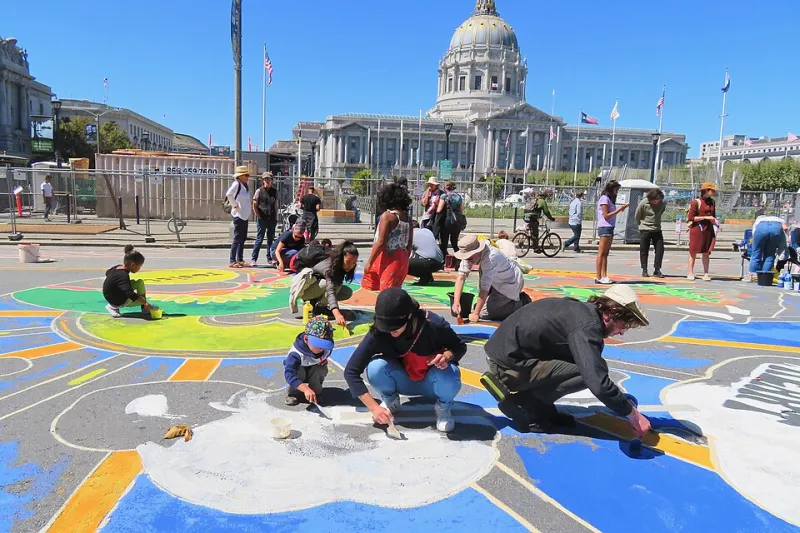
Photo: Fabrice Florin from Mill Valley, USA, CC BY-SA 2.0, via Wikimedia Commons
Every movement has a moment when the kids stop asking questions and start building. For the queer movement in America, that moment looks like a group chat, a Venmo handle, and a spreadsheet tracking which state legislator introduced which bill.
Gen Z queer activists have looked at the established playbook — the galas, the direct mail appeals, the annual black-tie fundraiser with a corporate sponsor banner — and concluded, fairly bluntly, that it's not for them. What they're building instead is messier, faster, and a lot harder to defund.
1. Mutual Aid Over Mission Statements
The first thing to understand is that Zoomers organize around material needs, not institutional branding. When anti-trans legislation started sweeping statehouses, the response in affected states wasn't a capital rally with a permit and a soundstage. It was rideshare pools to clinics, emergency housing networks for families fleeing hostile states, and cash transfers coordinated through linktrees.
Mutual aid isn't new — it's older than every nonprofit in the movement. But Gen Z has revived it with a political edge, treating direct support as a form of defiance. You can't strip someone's healthcare if you've already paid for their testosterone. The point isn't charity; it's building a system that makes the state's cruelty irrelevant.
2. Defense, Not Just Visibility
The older movement's crowning achievements were cultural: parades, representation, the slow normalization of out celebrities. Gen Z grew up inside that visibility and found it insufficient. Visibility didn't stop Florida's education bill. A Pride-month corporate logo didn't protect anyone in a Texas courtroom.
So the new organizing is defensive by design. Rapid-response legal funds. Bystander training for drag events. Encrypted channels for tracking extremist activity at school board meetings. The posture shifted from 'come see us' to 'we will protect each other,' and honestly, the urgency suits the moment better.
3. Ditching the Nonprofit Form Entirely
Here's the part that makes foundation program officers sweat: a lot of these groups don't want 501(c)(3) status at all. Incorporation means boards, means compliance, means an executive director making six figures while the actual work gets done by unpaid volunteers. Zoomers watched that structure eat the energy of every movement that came before them, and they're skeptical.
Unincorporated collectives, fiscally sponsored projects, and loosely federated networks let them move at the speed of a crisis instead of the speed of a grant cycle. Yes, it makes funding harder. Yes, it raises sustainability questions. But try telling a 19-year-old who just de-escalated a threat outside a drag story hour that they need to file a Form 990 first.
4. The Fediverse, Not the Fundraiser
Legacy organizations still communicate like it's 2009: email blasts, annual reports, a gala invitation. Gen Z organizers live on platforms their elders barely understand, coordinating across Discord servers and group chats that can mobilize hundreds of people to a county commission meeting in forty-eight hours.
This isn't just a preference for new toys. Decentralized digital infrastructure is harder to infiltrate, cheaper to run, and immune to the kind of donor pressure that softens institutional positions. When your budget is twenty $5 donations, nobody's money buys your silence.
5. Refusing the Generational Handoff — Because They Never Got Offered It
The most bitter critique Gen Z levels at legacy orgs isn't about tactics. It's about succession. Young organizers describe being invited to 'youth advisory councils' with no budget authority, no campaign control, and no path to actual leadership. So they stopped waiting for the handoff and started their own shops.
Some legacy organizations are adapting — ceding campaigns to younger coalitions, funding mutual aid networks they once dismissed. Most aren't, and the risk for the movement is real: a generational split where institutional power and street energy stop talking to each other.
But the smart money says the split resolves the way it always has. The new model isn't a rejection of the old movement's wins — marriage, employment protections, the right to exist in public — it's a building on top of them. The elders fought for a seat at the table. The kids looked at the table, noted who was getting fed, and decided to build a kitchen.